

The QLP Questionnaire: Samu
"Love is not something that overtakes you; it’s something that grows slowly. It emerges where safety becomes tangible. It doesn’t feel like intoxication, but like arrival."


Email us at queerloveprojectsub@gmail.com to take “The QLP Questionnaire.”
Plus, find out how to submit your original personal essay to The Queer Love Project.
We pay our contributors, so your subscription and support is valuable! Thanks for reading.
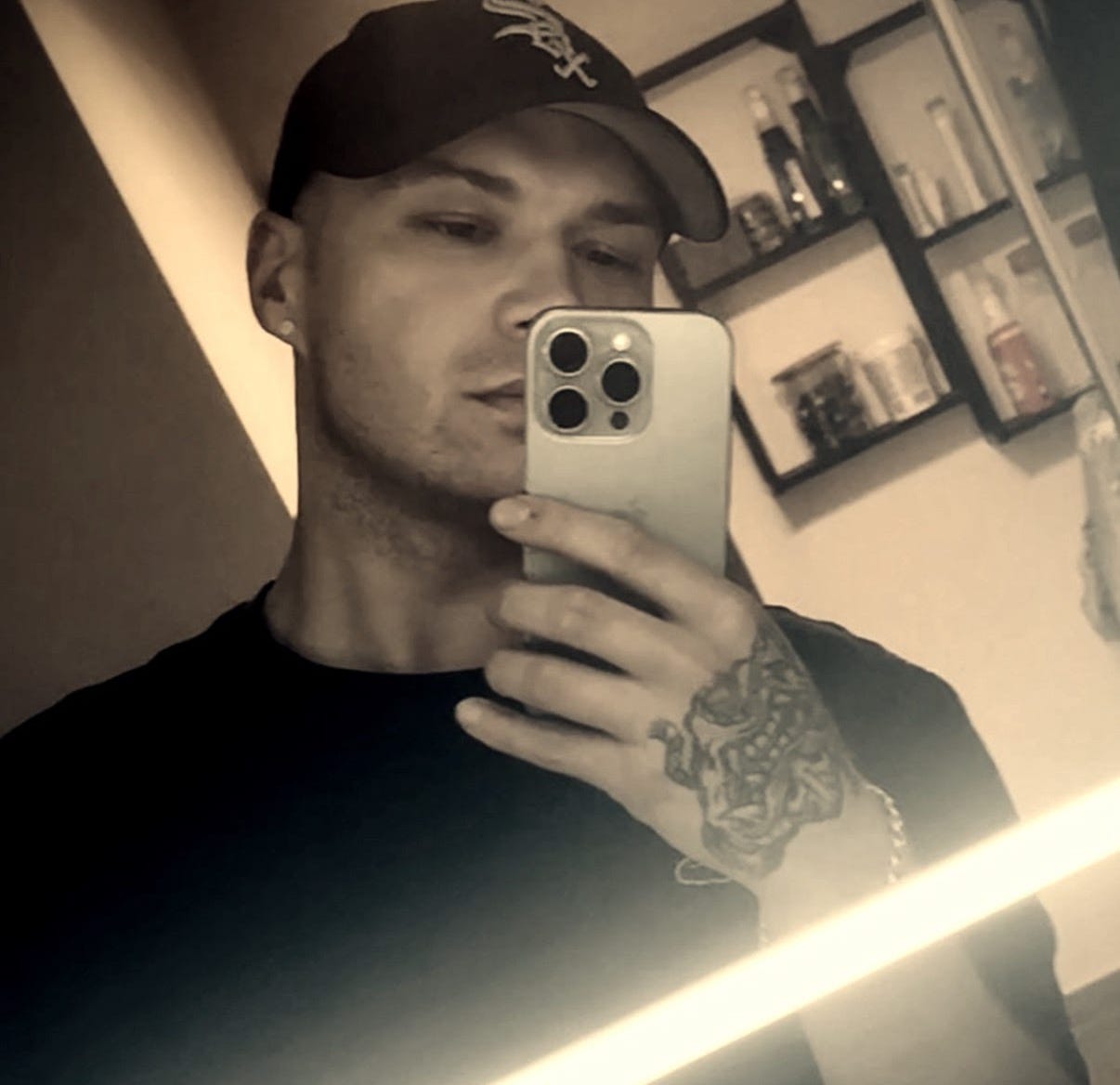
My name is Samu. I am 30 years old and live in a small town in Bavaria, Germany. When I’m not writing, I work in caregiving. The daily closeness to people and their bodies, their boundaries, and the often unfiltered realities of life shapes how I think about healing, relationships, and responsibility.
Alongside writing, I train in wrestling. It’s a form of physical grounding that helps me experience boundaries, presence, and regulation—not just intellectually, but directly through my body.
I write from a place of transition mid-process, not from a finished perspective. My texts grow out of experiences with dependency, intimacy, and the slow rebuilding of inner stability. Writing is a tool for me: to make patterns visible, to slow things down, and to stay honest. I’m not interested in perfect narratives. I write for people learning to tell the difference between love and survival, and for a kind of intimacy that develops quietly—especially from a queer, male perspective that does not see vulnerability as weakness.
What is your age, where in the world do you primarily live, where did you grow up?
I’m 30 years old. I live in a small town in Bavaria, Germany, where I also grew up.
How do you define yourself on the LGBTQ+ spectrum?
I define myself as queer not out of rejection of labels, but because my path hasn’t been linear. Desire, intimacy, and identity have never developed in clean or clearly separated ways for me.
What is your relationship status?
I am currently single.
Do you have an “ideal” relationship status?
In the long term, I wish for a committed partnership rooted in emotional safety, honesty, and shared responsibility. Right now, however, my ideal state is openness being able to grow without pressure. I no longer want to seek closeness out of fear or emptiness. If a relationship forms, I want it to come from inner steadiness and genuine choice.
What is the biggest misconception about being single or in a relationship?
That a relationship automatically means stability and that being single equals lack. Relationship status says very little about inner maturity. Intimacy can nourish, but it can also overwhelm. Being alone can be lonely—or deeply clarifying.
How would you define love? Is it the thing you work at for a long period of time? Or is it the strong feeling you feel for someone right from the beginning for no reason
I used to mistake intensity for love: the rush, the pull in the body, the immediate sense of connection. Today, I understand that much of that was inner unrest. Love is not something that overtakes you; it’s something that grows slowly. It emerges where safety becomes tangible. It doesn’t feel like intoxication, but like arrival. Real love means not abandoning yourself while being close to someone else.
Does the relationship fill your deepest needs for closeness with a person? Or do you prefer not to share every part of yourself?
I once confused closeness with fusion. I believed I had to give myself up or share everything in order to stay connected. Now I know that a relationship can only meet deep needs for intimacy if it also allows space to remain fully oneself.
When did you come out to family, friends and others for the first time?
I was never “classically” out. I don’t see myself within fixed categories. For me, coming out isn’t a single event or an obligation. When closeness or love emerges, it can be visible. Until then, I don’t owe anyone an explanation—not even my family. This openness feels truer to me than any label.
Did you have any LGBTQ+ role models as a child or teenager?
I didn’t have real queer role models growing up. Queerness was mostly indirect, often wrapped in shame. What I learned early on was how to be quiet how to manage my existence. Much later, I found mirrors in people who weren’t perfect but honest. They showed me that queer life doesn’t have to be loud to be real.
Are there any pivotal pop culture moments that you credit for teaching about love and/or relationships?
Artists like Freddie Mercury, Amy Winehouse, and Whitney Houston. Not as romantic ideals, but as people who showed their fractures openly. Their music taught me that love isn’t always clean and that there is courage in standing by one’s brokenness, even when it almost destroys you.
Do you have a Chosen Family?
Yes. My chosen family consists of a small number of reliable people friendships where I don’t have to perform or explain myself. These are relationships that have grown slowly over time.
What is your relationship with your biological family (if any)?
Distant, but respectful. I’ve learned to keep my expectations realistic. For a long time, I tried to create closeness through adaptation, which left me exhausted. Today I consciously choose what I share and where I protect myself.
What do you (did you) like about dating as an LGBTQ person? What do/did you dislike?
I value the possibility of honesty beyond traditional role expectations. Encounters can be more direct and emotionally open. At the same time, I’ve seen how easily intimacy gets confused with intensity. Dating often carries a lot of insecurity and projection.
Has race, ethnicity or cultural differences been a factor in who you seek out?
I grew up in a conservative environment where silence was the norm. That shaped less whom I was drawn to and more how safe I felt in closeness. Emotional freedom was something I had to develop later on my own.
Have you had any difficulties dating or finding/keeping a relationship?
Yes. For a long time it was difficult because I had never learned how to live with calm and safety. During a period of addiction, I mistook drama and emotional highs for connection. When real, quiet closeness appeared, I often reacted with withdrawal or unconsciously sabotaged it.
What’s the most surprising thing you have learned about relationships from your perspective?
That intensity is not depth and that calm doesn’t mean lack of feeling.
Have you experienced heartbreak?
Yes. I’ve experienced heartbreak that, in hindsight, had less to do with the end of a relationship and more with a dynamic that nearly erased me. For a long time, I called this “heartbreak,” even though it was deeply shaped by trauma and attachment patterns.
How would you term your sexual relationship with your primary partner? Has that changed over time?
In earlier relationships, sexuality was often a means of regulation seeking closeness and validation in order to feel safe. Over time, I realized that sexuality had long been a way to create safety instead of emerging from it. It often felt connected, but it was also boundaryless.
Do you have any moments of joy, happiness or pleasure that you can share about being in a same-gender or queer relationship?
Yes. There were moments when I felt truly seen without having to explain or hide. That closeness carried a kind of authenticity I hadn’t known before. It showed me what it can feel like to be not just tolerated as a queer man, but genuinely meant.
Are there any things that standard heterosexual relationships have that you feel are out of reach or that you wish you had or could achieve?
Heterosexual relationships often move through the world without having to be explained, defended, or contextualized. Intimacy is visible without becoming political. A relationship is allowed to simply be a relationship.
Have you ever been in a polyamorous relationship or would you like to be in a situation that doesn’t involve just two people?
No, not at this point.
Are you married? Have you ever wanted to be? Whatever the response, explain why and what your hopes, dreams and journey has been like.
I am not married. I can imagine commitment, but only if it grows from emotional safety and mutual presence not from expectation or fear.
Have you had a difficult time navigating the “roles” you should play in a relationship?
Yes. Roles gave me orientation for a while, but they were not sustainable. Today, presence matters more to me than function.
What is your philosophy about relationships?
I now know that real relationships are only sustainable when honesty and vulnerability are possible.
Any good/bad advice you received from a friend or queer elder?
A common piece of advice in queer contexts was: “Just forget him. Accept it. Be grateful you had someone at all.”
It was well-intended, but it often ignored how deeply attachment and loss can affect a person. I’ve learned that gratitude is not a substitute for processing and that it’s allowed to take pain seriously, even when there were good experiences.
Any advice you’d give to someone younger than you who thinks it’s impossible to find love?
I wouldn’t tell them that everything will be okay.
Sometimes love feels impossible because what you believed was love caused pain.
Not every longing is love some of it is an echo of what was missing.
And not every intense connection is deep some are simply familiar.
Love often doesn’t begin with another person, but with the moment you stop abandoning yourself just to avoid being alone.
BONUS:
We all need more inspiration. Below, please recommend something that influenced or helped shape you significantly that you’d recommend to someone else.
Book: Ocean Vuong’s On Earth We’re Briefly Gorgeous
TV Show: Heartstopper
Song: Whitney Houston’s “It’s Not Right But It’s Okay”
Play, Musical, Other Cultural Artifact: The music and public vulnerability of Freddie Mercury and Amy Winehouse.
 | A guest post by
|
Samu, Your insights to love are far greater than the usual for people of your age. I do not mean to diminish you being 30 but most gay 30 year old men are no where near the level of depth, maturity, and understanding that you demonstrate. I have told you before that I love reading your words. Your writing and the way you express yourself is detailed, articulate, and profound. Keep on being the wonderful person you are! Fondly, Michael
"For me, coming out isn’t a single event or an obligation. When closeness or love emerges, it can be visible. Until then, I don’t owe anyone an explanation—not even my family. This openness feels truer to me than any label." Love this, feel this way now, and wish I had 10+ years ago when I was coming out! I would've gone about it so differently.