

Stop Misquoting James Baldwin During Pride
Maybe you’ve seen it? An elegant bit of prose about love by one of our most adored and incendiary American authors. But there's a very big problem with this quotation.

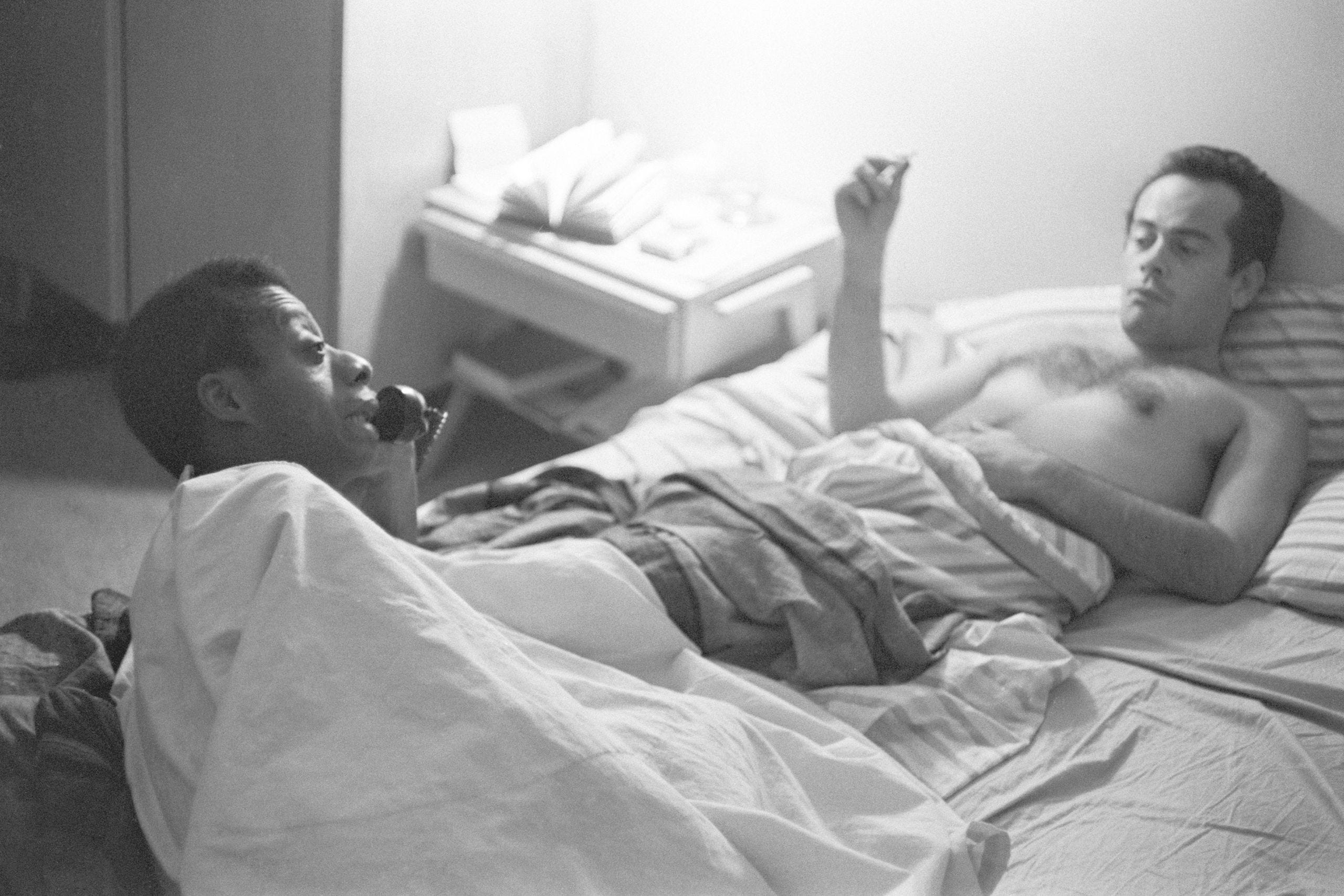
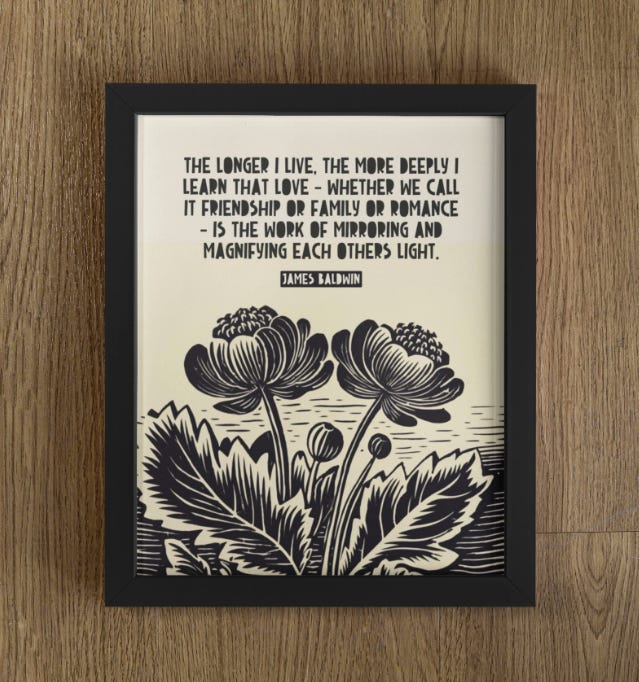
In a universe where James Baldwin’s sentences, uplifted from seven books, swirl like tides, it was somewhat unfamiliar, exciting in its newness. For a few years now, fans have been re-posting it on social media. I’ve seen it in all types of memes: colorful fonts encircling his wise face, photos of embroidered pillows, framed calligraphy, always acknowledging the words as Baldwin’s:
“The longer I live, the more deeply I learn that love — whether we call it friendship or family or romance — is the work of mirroring and magnifying each other’s light. Gentle work. Steadfast work. Life-saving work in those moments when life and shame and sorrow occlude our own light from our view, but there is still a clear-eyed loving person to beam it back. In our best moments, we are that person for another.”
The warm words remind us of love’s capacity to inspire, to redeem, to heal. For me, they spur memories of the discovery, so many years ago, of my own “clear-eyed loving person.” The words make me want to fall in love again, or rediscover the love I already have. All my friends and various strangers connected through social media are right to share its hopeful idealism.
The problem is: The words aren’t Baldwin’s. They don’t even sound like him. Maria Popova wrote them in an essay about Baldwin, titled “The Light Between Us,” in The Marginalian. Her words about the gentle and steadfast and life-saving work of love reflect her experiences as a contemporary white woman, a Bulgarian native living in the United States, a beloved public intellectual.
While I admire Popova and want her to get credit for her words, I can’t stand it when they’re misattributed to James Baldwin. He would never have written those words. “This quote is by Maria Popova, not James Baldwin, but she was writing about him,” I responded to a post from my friend Mary. Eventually I keep this sentence in a Google doc so I can import it when others make the mistake.
After nagging about it over a dozen times, I admonish myself. Stop correcting people! Stop being an annoying perfectionist! Why does it matter so much? Since the upsurge in reliance on large language models like ChatGPT and Claude to write for us, threatening to so many artists, I feel an even greater urgency when it comes to honoring a particular writer’s distinctive voice. If you plug the quote into ChatGPT, for example, and ask it to tell you where the words originated, it will tell you it’s Baldwin—it’s “deeply Baldwin-esque in spirit”—although there is some question about the true author.
Like so many of his readers, I have loved and read and re-read James Baldwin since I was in high school. Especially in the last few years of racial violence, global extremism, and war, my astonishment at his prescient wisdom has grown. He has lighted the way for understanding when I was overwhelmed, even on occasion bestowed a flash of hope that humanity can redeem itself through the power of language. (Nicholas Boggs’ recent biography, Baldwin: A Love Story, has been hugely popular for a reason.)
Baldwin was a queer, African American firebrand during an era when both identities were targeted with contempt and violence—and how much, really, has changed? His literary fingerprints, his authorial voice, reflect that. Part of the annoyance I feel when I notice another misattribution is that the mistake dishonors his work, his struggles, the expansive, unflinching, never unfeeling vision that streamed into his hard brilliance. It’s a moment when he is strangely not seen, talked over, when so much of his work was about shedding light on what is invisible, unspoken, and ignored. The irony is intolerable.
Let’s look at those fingerprints. The style is the first clue.
“Gentle work. Steadfast work. Life-saving work….”
The drum thump of those two broken phrases and the third that carries the rhythm and starts the next sentence reflect the nuanced sensibility of a poet like Popova. It’s marked with a flash literary sensibility, the era of the burst, the tweet, the single word exclamation. I’ve scoured Baldwin’s work to see if he ever wrote in such fragments. He didn’t. What he usually did was craft intricate sentences pulsing with drama and emotion, echoes of Sunday sermons in Harlem, a near-symphonic melding of language and urgency. That’s why we love him. But like most midcentury writers he wrote in complete sentences.
The reference to a “clear-eyed loving person to beam it [love] back” betrays some of his philosophical and experiential differences from a contemporary writer like Popova. Baldwin wrote a lot about love. He had compassion for characters who were searching for it, vainly, against forces of moral convention and racial prejudice. “Love does not begin and end the way we seem to think it does. Love is a battle, love is a war; love is a growing up,” he tells us darkly in Nobody Knows My Name (1961).
I’ve read the tragic love story Giovanni’s Room about 10 times since I was in high school. There is no more absurd mission than to pick it up again, intent on finding a beaming, cleareyed, loving person. Set in Paris, the 1956 novel—controversial, nearly unpublishable in its day—explores the forbidden love between a bisexual white man, David, and an Italian man, Giovanni.
Early in the novel an older queer man, Jacques, tells David: “Somebody, your father or mine, should have told us that not many people have ever died of love. But multitudes have perished, and are perishing every hour—and in the oddest places!—for the lack of it.” The reader hopes his bitter words won’t be true, but, sadly, it describes every romantic relationship in the novel. In this midcentury world, so much of it based on Baldwin’s experiences as an expatriate, the pursuit of same-sex love is enshrouded in shame, lies, obfuscation, and terror. A hostile overlay of homophobia, alluded to without being explicitly identified, except as “illegal” and “immoral,” makes it difficult to see anything apart from the societal rules the characters violate. Not only is that beaming, clear-eyed, loving person absent, but the opposite is abundantly painfully apparent: a world saturated with shame and its counterparts: distortion, irony, lies.
Still in Giovanni’s Room, I went looking for examples of “Gentle work. Steadfast work. Lifesaving work”—evidence of pure romantic devotion and commitment—but that was as futile as looking for the clear-eyed, loving person. While on the surface David is conflicted and impulsive about his same-sex desires, at a deeper level he’s just understandably terrified of the social repercussions. There is no “life-saving work” in a story which begins gloomily with the certainty that Giovanni, behind bars, set to face the guillotine, will die by the end.
Is there a pasaage about love that is most truly reflective of Baldwin’s voice? I might choose this one from Tell Me How Long the Train's Been Gone (1968): “Everyone wishes to be loved, but in the event, nearly no one can bear it. Everyone desires love but also finds it impossible to believe that he deserves it.”
In a hostile world, with racial contempt and homophobia as available as oxygen, this more muted statement—love trembling in the distance like a mirage, obscured in a haze of shame, the hope of another generation—is closer to his truth. Whether it’s friendship, family or romantic relationships, for people on the margins, in a world saturated with shame and contempt for who we are, it’s a painful lifelong struggle to see ourselves or others clearly.
So I keep gently correcting people. I want to honor the experiences that formed James Baldwin—and his righteous anger about those experiences—that made love so riddled and unreachable. By naming the shame and self-loathing and terror that characterize the doomed romance between David and Giovanni—forces that also weighed heavily on him—he helps all of us, queer and straight, to transcend its limitations, to break free, for the more expansive, light-filled forms of love that Popova describes. That everyone deserves.
Wayne Scott is a writer and psychotherapist in Portland, Oregon.
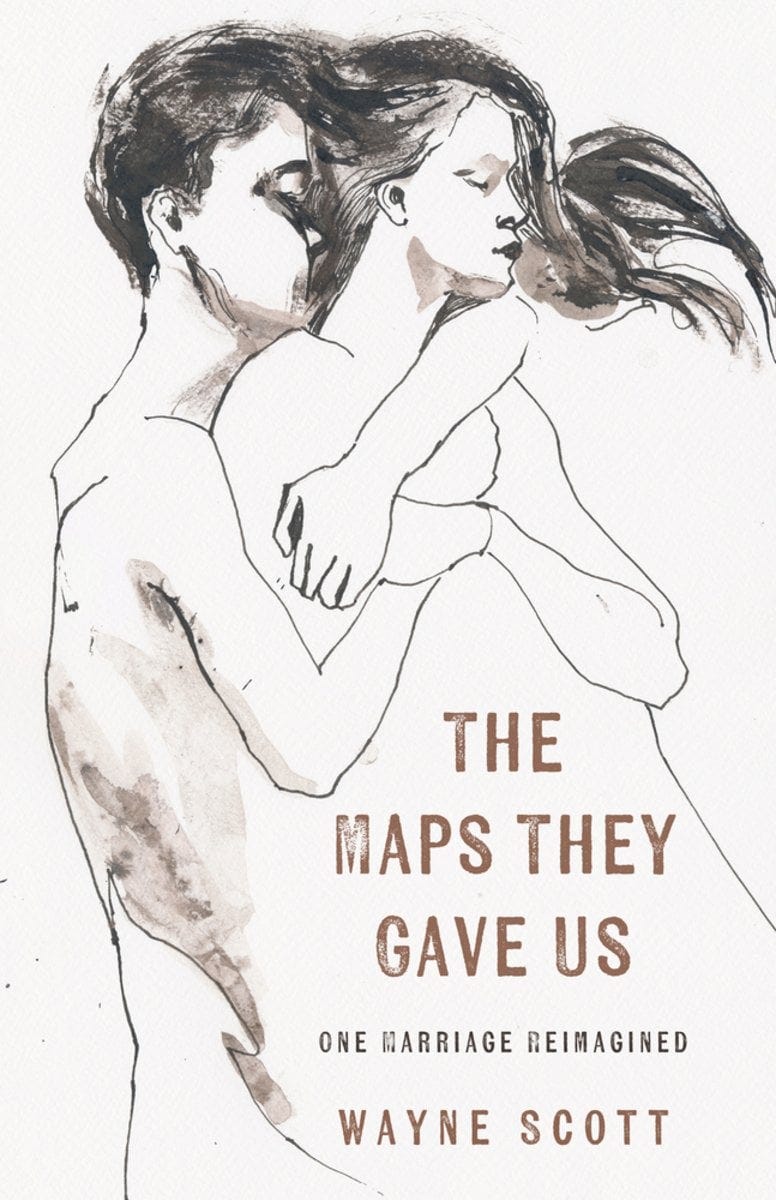
His memoir, The Maps They Gave Us (Black Lawrence Press, 2025) was a finalist for both a Lambda Literary Award and the Oregon Book Award.
 | A guest post by
|
Thank you for not only setting the record straight, but the analysis. I’ve learned a lot here. 🙏
Seeing the title, I thought this would be about another quote often misattributed to Baldwin: “We can disagree and still love each other unless your disagreement is rooted in my oppression and denial of my humanity and right to exist.” Seems to come from 2015, by a screen name “Son of Baldwin,” Robert Jones, Jr.—also a Black, queer man and writer.