

She Talked to Angels
In memory of a lover who saved me but couldn’t save herself.

Email us at queerloveprojectsub@gmail.com to take “The QLP Questionnaire.”
Plus, find out how to submit your original personal essay to The Queer Love Project.
We pay our contributors, so your subscription and support is valuable! Thanks for reading.
I didn’t see her forearms at first. I didn’t see that her scars weren’t single thin lines on the inside of each wrist but long-healed layers of parallel, razored lines bubbling from her wrists to her elbows. All I saw at first was her smile.
A friend and I had stopped by a lesbian house party on a leafy street of Kansas City bungalows. A few women stood around the dining room table, but conversations seemed strained. So my friend and I floated to the living room, sank into the couch and hoped for something exciting to happen. Across from us, a woman in a vintage cardigan, baggy pants, and a sloppy-cute DYI haircut held forth in a La-Z-Boy for a couple of others who were unusually attentive. She nursed an O’Doul’s and smoked Camel Lights, occasionally looking over at us and catching my eye with a half smile—clear signals I ignored, proud of myself for staying impervious despite her attractiveness. I was not in the market for a girlfriend. After a while, she cranked herself out of the La-Z-Boy and loped towards us.
“Can I have a light?” Her cigarette was ready near her lips, her question directed at me even though everyone smoked so we all had lighters.
I obliged, thumbed my Bic, gave her a nod.
“Thanks,” she said, and she returned to the La-Z-Boy to hold court.
It made my night, this fleeting flirtation, along with the fact that nothing else came of it. I’d always fallen too easily for that kind of thing. Now I was in a new phase of adulthood, trying to be more careful. But on Monday at the office, where I worked as managing editor of Kansas City’s scrappy alt-weekly, the phone rang, and someone said it was for me.
“Hi,” she said, in a voice instantly familiar though we’d barely spoken. She introduced herself—an all-American good-girl name like Debbie, or Connie, or Cindy, though she deserved something more ominous, like Cybil, or Sylvia, or Alexandra, so I’ll go with the latter—“from that party the other night.” She asked me to coffee.
We met the next day at a popular Midtown hangover dive, where Alex chose a table in the back near the server station.
“I hear you’re a journalist,” she said. “I’m a writer.”
This explained it. She must be angling for a job.
“I hate journalism,” she said. “Boring corporate bullshit.” She said this in a way that didn’t feel offensive though it should have. She was not entirely wrong. Besides, I took it as a challenge. Another flirtation.
“Some of it,” I acknowledged.
“I write fiction,” she said, and listed a handful of literary magazines where she’d been published; I didn’t say I’d never heard of them. Soon I would read her work, and it felt daring and experimental, stream-of-conscious like something Virginia Woolf might have written on really good dope. Except that Alex didn’t use dope. She didn’t even drink.
I’d never met another lesbian who was a writer, let alone a good one. Or one who didn’t drink. If I’d been smarter, or stronger, I’d have thought more carefully about those forearms, now clearly exposed below the rolled-up sleeves of her jean jacket. Later, I would see more recent scars in places strangers couldn’t see. But I didn’t have to think about the scars that first day because she was so open about them.
“I tried to kill myself a few times,” she said with a nod toward her forearms. She delivered this information quietly but matter-of-factly, leaning toward me and closing her hands around the thick, restaurant-issue coffee mug. “I spent some time in Menninger’s,” she said of the famous psychiatric hospital in Topeka, supposedly one of the best, where her parents could afford to send her because her father was an insurance agent. But she’d never forgiven her parents for sending her away. “My mother hates me,” she said. “She’s a cunt.”
Even though she didn’t talk to her parents anymore, they’d given her the keys to a tiny cabin at a lake in the Ozarks. Fishing getaways helped her stay sane, Alex explained. Along with meds and recovery meetings.
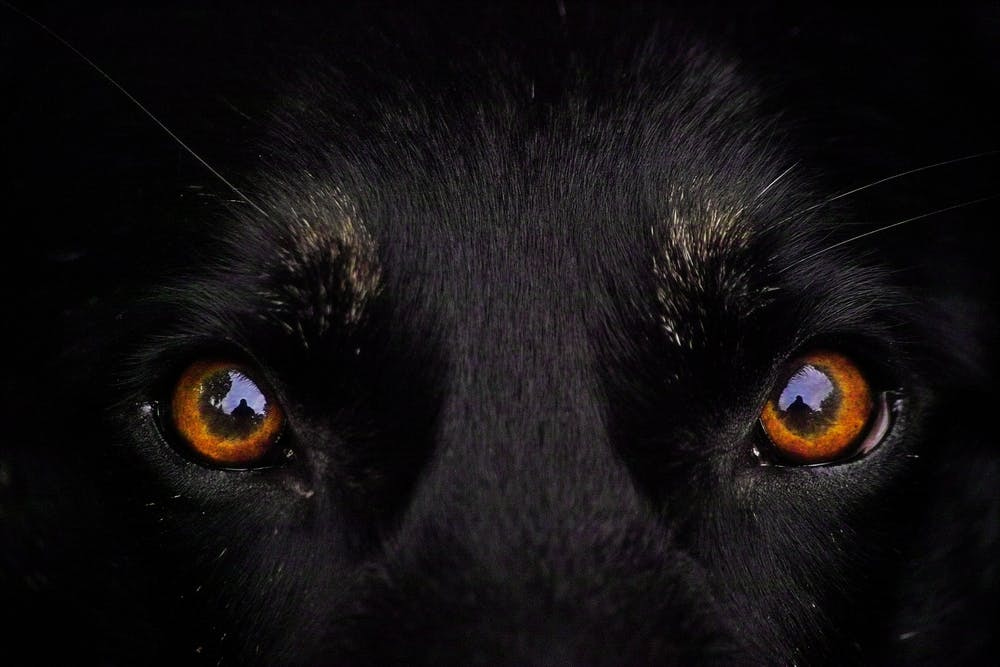
It wasn’t long before I spent a night at Alex’s place, a third-floor apartment with slanted ceilings in a hundred-year-old house on a street of former mansions. The landlord kept a wary but empathetic distance and didn’t ask questions about her enormous black wolf dog. Wolf Dog’s yellow eyes blazed at me the first time we met, but I held the creature’s gaze and she stepped back; we were friends after that.
Remnants of Alex’s former girlfriend, an artist, hung on a couple of walls; on her bed were quilts made by her grandmother, the only member of her family, she said, who’d ever loved her. In the narrow living room was a leather couch and a widescreen TV, neither of which she could have afforded on her monthly disability check and food stamps, but she said she paid for them with under-the-table house painting jobs. The TV was essential, she explained, because the action thrillers she checked out from Blockbuster every day were another way she stayed sane. Her meds kept her up all night too jumpy to write, so she burned vicarious energy watching fiery car chases and two-fisted weaponry wars until morning, then sat down at the vintage Formica table in her kitchen with a pot of coffee and wrote until her noon recovery meeting.
When I came over after work, I’d find her sweetly groggy from naps. She didn’t listen to much music, but she had good taste: Bonnie Raitt’s Nick of Time, Sinead O’Connor’s I Do Not Want What I Haven’t Got and Living Colour’s Time’s Up were all on repeat. But the song she blasted loudest was the Black Crowes’ brand new “She Talks to Angels”—a celebration of someone who only mentions addiction in certain company, someone who’ll “tell you she’s an orphan after you meet her family,” someone who courted a too-close-for-comfort relationship with death.
Alex had a reputation. My friends warned me I couldn’t save her. I told them I knew that and had no intention of trying. Instead, I felt something like strong enough to handle her, undaunted by her diagnosis of borderline personality disorder, which she legitimately dismissed as a vague DSM catch-all anyway. I imagined us as a literary couple: She the brilliant tortured writer, and me the brilliant steady editor, even though this required me to deflect her ongoing derision of journalism. I countered that I was a rebel because my paper was an alt-weekly, not the sold-out Kansas City Star. But my paper ran the syndicated “News of the Weird,” stupid fluff she rightly said hardly served humanity. My paper also ran long and deep cover stories about important shit in our city. Cool writing about music, movies and restaurants. Entertainment listings. A genuinely helpful sex column. Personals. All of that helped humanity. Nobody important really cared about city hall, she said. I decided this tension was good.
I didn’t drink or smoke weed around her, which required me to change my daily habits. Since we were dating, I had no reason to go to gay bars, but the paper’s editor and I still had important business requiring Jack and Cokes well past happy hour at the restaurant below the office. And joints enhanced quiet contemplative mornings back at my own apartment. I entered a new phase of always calculating whether and when I had time to get high.
When summer arrived, she took me down to her cabin. The quarter acre of land and one-room structure her parents had informally bequeathed her was at the edge of Truman Reservoir, a spider-shaped lake in the low wooded “mountains” of middle Missouri. Getting there required passing Confederate-flagged properties along a winding two-lane. Beyond the unpleasantly named town of Warsaw, we stopped at a bait-and-tackle shack to buy worms and took a dirt road dead-ending at the dock she’d built one summer.
Rocking gently in an aluminum boat, in a bathing suit, hot sun sparkling on the water, shoreline trees blocking any view of other people—all of this felt more serene than smoking a joint. In her boat, a cold Dr. Pepper tasted better than a Miller Lite. I hadn’t fished since farm-pond afternoons with my grandfather, when I was too young to be anything other than frightened by the pull at the end of a line. Now each nibble was a shot of dopamine. We had no intention of eating anything we caught (dinner would be microwaved taquitos and ice cream with Alex’s VHS of La Femme Nikita on another big-screen TV, this one taking up an entire cabin wall at the foot of the bed). I felt sorry for the fish whose mouths we tore up, but catch-and-release was humane, Alex told me. If anyone understood how cuts healed, I decided, it was her.
Back in the city, she made it clear she knew when I was getting drunk or high, despite my efforts to hide it. One night on the phone after happy hour, I told her I loved her.
“Don’t tell me that when you’re drunk,” she sneered and hung up.
I called back.
“In fact,” she said when she picked up, “don’t ever call me again.”
*****
It seemed dumb to be mad at someone for telling you they loved you even if they were loaded when they said it, and I’d have been sincere about that in any condition. But I admired how she stood on principle. Alex’s cut-off stung but as breakups go, this one seemed manageable. I limped around with a mild case of humiliation.
But I also noticed how, when I promised myself in the morning I wouldn’t get high that day, I’d light up a joint after work anyway. I remembered that, whenever my stash ran out before payday, I’d feel better after a few days of not smoking—a feeling I forgot as soon as I cashed my check and bought another bag. I realized I wanted to stop but couldn’t.
So one Saturday at noon, I drove to a two-story brick turn-of-the-century school building where a recovery group met twice a day in a second-floor classroom. Long brown folding tables and metal chairs were arranged in a square; against two walls were couches that looked like someone had picked them up off a curb, beneath blackboards chalked with announcements. The hardwood floor had been worn soft by thousands of school kids over the decades. Along the south wall, sunlight poured in from the bank of tall windows each room would have needed in the days before air conditioning. It was as if I’d been transported back to my own first-grade classroom except now, the teachers were the types of people I’d partied with, and some had done far harder and scarier drugs, had lived much more dangerous lives, and had hurt themselves and other people way worse than I had. They told riveting stories.
I went to meetings every day at noon. I wasn’t trying to get Alex back, but when I told her she softened. After a while, I started going over to her place in the evenings again and we went to the lake every weekend. Then I moved in with her. Because she slept late into the mornings, I walked Wolf Dog around the block at dawn. This became a daily ritual where I began, with a mind clearer every day, to consider concepts like self-esteem, the lack of which had inspired years of ridiculous choices. I tried not to regret how I’d wasted so much time. What mattered was what I did with my time now.
Wolf Dog was a calm and steady presence for this kind of contemplation. One morning, having always considered her choke chain cruel and unnecessary, I hooked her leash to the end that didn’t pull tight. About halfway around the block, she looked up as if I were an idiot, slid out of the loose chain and disappeared into the neighborhood. Fighting nausea over thoughts of what might happen to a wolf loose in the city, or what kind of harm she could cause children or really anyone, and anticipating Alex’s fury, I ran back to the house and up three sets of stairs to the apartment.
“It’s OK,” Alex said from her medicine fog and rolled over in the bed. “She’ll come back when she’s hungry.”
Three days later Wolf Dog was back, a giant black form, edgy and exhausted under the big oak tree in the front yard just before sunrise, her long fur matted and covered with leaves. Only now, decades later, do I understand how Wolf Dog’s behavior mirrored Alex’s.
Alex understood the world in ways I couldn’t. Once, at a grocery store after the first of the month when her food stamps arrived, she went directly to the butcher and picked out expensive filets. I kept quiet but grew more tense in each new aisle as she loaded the cart with high-end frozen pizzas, gourmet ice cream and fancy bottled water. In the checkout line, she handed me the coupon booklet. Absorbing the disapproval from everyone around us, I paid for these luxuries with food stamps. Maybe Alex wanted me to know what it felt like to be judged, or maybe she just wanted a little relief from being judged.
I’d accepted the reality that her welfare checks helped bankroll a life materially better than mine and that of her neighbors down at the lake—they lived in a trailer while Alex had a cabin and an apartment, both with nice TVs, and a boat—and she could work hard for under-the-table cash when she wanted it. All of which confirmed everything the politicians said about welfare cheats. But I wouldn’t have traded her mental torment for a life of less work and nicer stuff. I also knew she couldn’t have held a steady job. Some evenings I came home from work to find her reading in bed, a coffee cup on the nightstand beside her, and when I’d ask how her day had been, she’d lift the coffee cup to show a razor blade waiting underneath it. So I didn’t mind if people like Alex lived on a few hundred bucks of taxpayer money each month if it might stop them from hurting themselves or someone else.
*****
One night Alex didn’t come home. All she’d say the next morning was that she’d been at Tootsie’s, which meant she’d spent the night with a girl she’d met at the lesbian bar. Through the swirl in my head, I calculated my best option: say nothing, be the bigger person. The sun was up but Alex took her nighttime pill and went to our room. She could have been doing more dangerous things, I told myself. Go to work. Give yourself time to think.
When she wasn’t home by 10 o’clock that night, I drove to Tootsie’s. Other than the mulletted bartender, only two women were in the place, sitting on stools with Rolling Rocks in front of them, their faces close in conversation. I recognized Alex’s expression though I hadn’t seen it in a while: full-on charmer.
When she glanced up and saw me coming, she smiled. Like she thought I was joining them for a drink.
“Come home,” I demanded.
“Don’t,” she said sharply. She took a swig from the green bottle.
I turned to the wide-eyed girl on the other bar stool. Cute. Young. Unaware of what she was getting into. “Watch out,” I said, and left.
Alex would be gone for a few nights, I assumed, giving me time to figure out where to go. I was in the shower the next morning when I heard the bathroom door open and felt a cold blast and saw Alex in front of me. In a single motion, she’d pulled down the curtain rod and flung off the plastic fabric; now she held the rod like a sword and began waving it to one side and then the other, smashing the mirror over the sink and shattering glass shelves as I stood naked under the running water. Clear-eyed, sober, exquisitely controlling the weapon, she swung it a few times within an inch of me but never made contact. Then she turned and walked out of the bathroom, out of the house, long enough for me to dry off, pull on some clothes, call one of my recovery friends and start shoving all of my stuff into garbage bags while I waited for him to come help. Alex showed up again just as my friend and I were about to carry the last garbage bags to my truck. On our way out, she threw a circular saw across the living room. It landed a couple of feet short.
How long would I have kept living there if she hadn’t forced the issue? By then I knew she could never really balance the combination of tactics and diversions she said kept her sane, that she hated the way meds made her sluggish and dulled her writing, that recovery meetings involved following other people’s suggestions, which she was wired to resist. But the meetings had worked for me. They’d been free therapy, rich with entertaining stories other people had been through that put my own life in perspective. Alex’s introduction to the idea of recovery was a gift far more valuable than the cost of our two turbulent years together.
A year or so later, I heard Alex had bought a house in a neighborhood near mine. I didn’t spend too much time wondering how she’d managed to buy property, but I did drive by and saw that she’d turned it into a high-fenced fortress that appeared to violate more than a few city codes. I could imagine the inside: dark, loud with action movies in Surround Sound and razor blades under cups on nightstands. One time I saw her at the hardware store. I was in the check-out line as she approached, saw me and smiled the rare broken, apologetic smile that only came across her face in moments of sincerity. The look that could pull a person back in if they weren’t careful.
“Don’t talk to me,” I said.
“Hi,” she said. As always, seizing whatever subversive power she could if even for a moment. I paid the cashier and left.
Fourteen years after the breakup, I heard through a friend the news that I’d long anticipated: She’d finally killed herself. I learned no details, so I envisioned all the ways she might have tried. Each time, I imagined her smile as she understood the pain was about to be gone forever. And I’d always be grateful to her for showing me a different way to live.
C.J. Janovy is a journalist with deep roots in the American Midwest, now writing the Queer Elder Expat column on Substack. Her book No Place Like Home: Lessons in Activism from LGBT Kansas won the Stubbendieck Great Plains Distinguished Book Prize and was nominated for a Lambda Literary Award in LGBTQ nonfiction. She has been director of content at Kansas City’s NPR affiliate, opinion editor and writer at Kansas Reflector, and editor of Kansas City’s alt-weekly. Her journalism, essays and fiction have also been published by Switchyard, Catapult, NPR, New Letters, Ms., the New York Times and elsewhere.
If you or someone you know is struggling or in crisis, help is available.
 | A guest post by
|
You curate the best essays, Jerry!
Wow. What a powerful story! Thank you for sharing with us and for being so vulnerable.