

The QLP Questionnaire: Steve Susoyev
Friendship is much more valuable and fulfilling than most romantic relationships. When someone says, "It didn’t work out between us.' I'm tempted to say: "If we became good friends, it did work out!"


Email us at queerloveprojectsub@gmail.com to take “The QLP Questionnaire.”
Plus, find out how to submit your original personal essay to The Queer Love Project.
We pay our contributors, so your subscription and support is valuable! Thanks for reading.
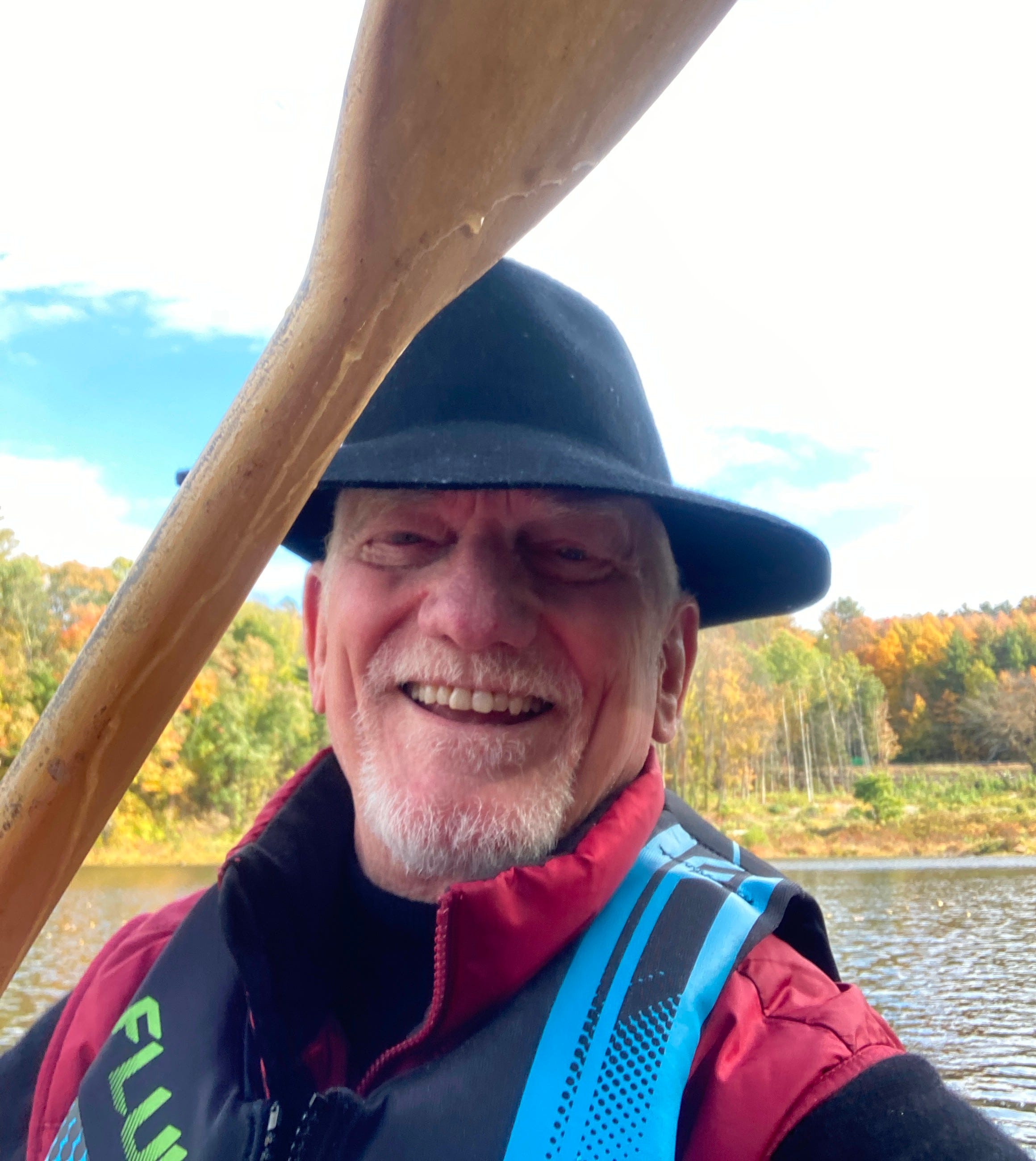
First, let me say “Thank you. I’ve sat up in bed working on this questionnaire for hours. I learned some good things! (Such as the importance of stressing the value of friendship over sexual-romantic connections!)
My “bio,” I realize as I come back to this question, is mostly contained in my rather lengthy answers to other questions below. But here are a few points:
We didn’t think of being “in the closet,” but my first boyfriend and I were careful about who knew and who didn’t. Ultimately, my sadness and anger over his choosing a closet-requiring career is the reason I pulled away from him. We stopped seeing ourselves as a couple in 1972, after five years together. We’re still close friends, after some anguish for each of us.
One other thing worth mentioning: Like many gay men, I’ve sometimes found myself realizing that a woman friend had fallen in love with me. I loved the attention, and when in my twenties, I encouraged these friends by having sex with them. Even then, I realized that I was using them, because I enjoyed seeing that straight men were envying me.
At 32, I was shocked when my mother said, “You’re playing with fire. That girl’s in love with you.” She was right. After a three-way with this friend and her husband, which he had initiated, our friendship fell apart. I decided then never again to have sex with a woman. We did eventually restore our friendship, but it was never the fun, easy thing we had previously enjoyed.
What is your age, where in the world do you primarily live, where did you grow up?
Age 73. Have lived in San Francisco since 1987. Grew up on a farm west of Phoenix, Arizona.
How do you define yourself on the LGBTQ+ spectrum?
Gay man, cis male.
What is your relationship status?
My partner and I met on a hookup app 17 years ago. We dated for 10 years, then he moved 3,100 miles away to care for his mother after she was diagnosed with aggressive cancer.
After she died, he bought his sister’s share of the house in which they had grown up, and he’s still living there. It’s on the edge of some beautiful Massachusetts woods. I spend about 12 weeks there every year, and I love our time together. Lots of cuddling, massages, some sex.
When we’re not together, we have sexual encounters with other guys—and share few details. My partner is 59, and he gets a kick out of knowing that his 73-year-old partner hooks up with hot younger guys. One guy in his mid-forties pays me to give me oral sex. This actually is therapy for him, as he works through his childhood trauma of abuse.
I’m very conscious, when considering a sexual connection, of avoiding anyone who is looking to fall in love. I will keep myself emotionally available to my partner.
Do you have an “ideal” relationship status?
Very unexpectedly, I like the dating-devoted relationship, in love but not living together, with casual sex on the side. I would very much like to live closer than 3,100 miles, though!
What is the biggest misconception about being single or in a relationship?
Many people seem to expect that a committed relationship will give them everything they need in life. Yet, I know a lot of couples who are bitterly disappointed with each other. And, unfortunately, some have withdrawn from true friends in pursuit of this romantic fantasy.
When was your first intimate moment? Was it with someone you liked? Did you feel pressured into it?
My first boyfriend and I met at a tennis tournament, playing for rival high schools. I was 13, and he was 15. The intimacy was manifested only in eye contact. I experienced intense attraction and the knowledge that: “Oh! This is it! Some day I’ll share this and more with a guy.”
Two years later, in 1967, that same boy and I recognized each other in a journalism class in community college. We explored kissing in the photography dark room, with the red light on above the door, so no one could interrupt us. Soon we discovered sex in discreet locations. Some friends guessed what was happening between us, and it wasn’t a problem. “You guys are in love,” one woman in our class said privately, and she seemed to envy us. We were a couple for five years, and he is still one of my closest friends.
This gentle introduction helped me not to feel the trauma or fear of “coming out.” When I was 19, I told my parents, “Gary and I are more than friends.” My father was upset, and he felt we had betrayed him. My mother said, “You didn’t think you had us fooled. You don’t argue like buddies; you argue like a couple.”
We all had dinner together two days later, and my father suggested that Gary move into my room after I moved to New York for school. Gary’s family would help him attend a four-year college only if he went to a Baptist Bible college. My parents wanted him to be able to attend a “real school,” which to them meant Arizona State University, and he finished school while living with them, in my old room.
How would you define love? Is it the thing you work at for a long period of time? Or is it the strong feeling you feel for someone right from the beginning for no reason?
For many years, I pursued emotionally unavailable guys, many of them straight-identified, who had chosen me to experiment with sexually. I felt that I “loved” these guys—I guess because they had shared their vulnerability with me. This all happened before AIDS struck. In those days, being bisexual was perceived as a very cool thing for young men.
Does the relationship fill your deepest needs for closeness with a person? Or do you prefer not to share every part of yourself?
I’m open to sharing more. My boyfriend is super shy, and I’ve learned not to push him to reveal more than he is comfortable with. But, after 17 years, he has shared a lot!
When did you come out to family, friends and others for the first time?
My previous answer to the “first intimacy” question pretty thoroughly addresses this question, I believe. My loved ones and friends could see that my “best friend” and I were in love with each other. His sister very actively supported us as a couple—such as by inviting me to family events.
I do need to mention one other experience. I was a few years younger than my high school classmates. I certainly understood that I must dress and walk and talk in a way that would hide my attraction to boys. I don’t think I was very successful. Friends from that time have told me that, looking back with today’s understanding, they always assumed I was gay.
When I was 13, after tennis practice, four football players ganged up on me in the shower. Three held me down while one of them shoved a small bar of soap inside my rectum. One of them had an erection. I was screaming, and the football coach—who was in his office—didn’t come to help me.
After this experience, I came to realize that all my posturing had not helped to disguise who I was, a queer. In fact, I had shown these guys my weak spot and given them ammunition. I made a decision not to try to hide myself any more.
Once I got to college, then in my professional life as a marriage and family therapist, and later as a lawyer, I felt very free to be myself, thanks to this realization.
Did you have any LGBTQ+ role models as a child or teenager? What do you remember about images of same-gender or queer relationships or messages you gleaned?
Male dancers on TV stood out with their beautifully developed bodies and sometimes very effeminate movements. My father called them “fruits,” and it was clear that I should avoid acting or looking like them.
My mother loved Oscar Wilde’s plays and essays, and she explained how he had brought the horrors of prison down on himself by challenging the man who had accused him of being a “sodomite.” I grew up understanding that a homosexual was very vulnerable, but I also was inspired by his outrageous wit.
The closest person to a positive role model was James Baldwin. He didn’t write openly about his own life as a gay man, but his book Giovanni’s Room was about two men who deeply loved each other—and this inspired me.
Are there any pivotal pop culture moments that you credit for teaching about love and/or relationships?
“Giovanni’s Room,” book by James Baldwin: a true romance between two men.
“Try For the Sun,” song by Donovan, 1966: A lovely story of two boys huddled together in an alleyway, with “raindrops and tears in our eyes.” “…and when he thought I was asleep, he put his poor coat ‘round my shoulders, and shivered there beside me in a heap….“ That song still makes me cry, over 59 years later.
At 16, while still living in Arizona, I saw the stage version of Boys in the Band with my boyfriend, and we both felt horrified. I was just about to leave for school in New York, where I thought gay people had the freedom to be themselves, and this play demoralized me because these gay men treated one another abusively.
Do you have a “found family” or “chosen family”?
Yes. Some friends have been in my life since I was 17, and we’re still close over 50 years later. I have been asked to be the godfather of four children. I’ve conducted two weddings and been honored in many other ways.
What is your relationship with your biological family (if any)?
My parents both died before I was 40, and I was on good terms with them both.
I have several cousins in Arizona from whom I became estranged when we were teenagers, after one gave me a dollar to give him oral sex. I was 12 at the time, and I avoided him and his siblings for 40 years, until he was diagnosed with cancer. I did my best to forgive him in the months before he died. His brother and sisters have embraced me in the past 15 years, and I have embraced them.
What do you (did you) like about dating as a LGBTQ person? What do/did you dislike?
My only real experience with “dating” began in 2008, when I was 56 and I met my current partner. Dating is one of those experiences that, even in high school in the 1960s, I regretted that gay people like me were missing.
Has race, ethnicity or cultural differences been a factor in who you seek out?
I’ve had fun sexual encounters with men of every race and most ethnicities. I’m particularly sexually attracted to Hispanic men, who sometimes remind me of the Mexican boys with whom I engaged in sexual play on the farm during my childhood.
Have you had any difficulties dating or finding/keeping a relationship?
Yes! During my thirties I was plagued by my romantic obsessions with “straight” guys who had approached me for sexual exploration. I lived for five years with one, for two with another, but always with an undercurrent of anxiety about when they were going to dump me. One eventually asked me to be the best man at his wedding, and his wife asked me to serve as the godfather of each of their two sons, so this one has had a very happy progression.
What’s the most surprising thing you have learned about relationships from your perspective?
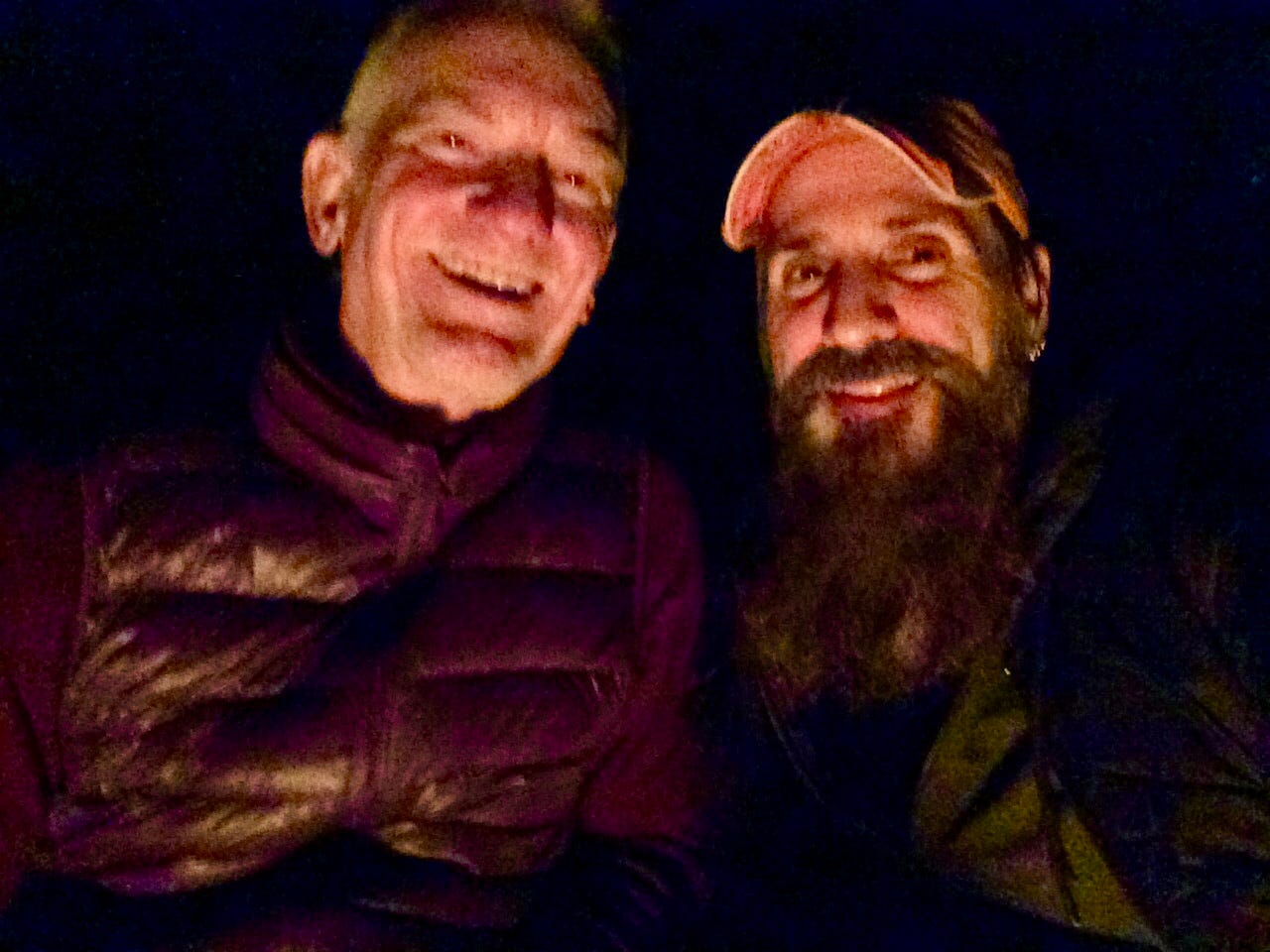
Friendship is much more valuable and fulfilling than most romantic relationships. When someone says, “Oh, it didn’t work out between us. We’re just good friends,” I’m tempted to say, “If we became good friends, it did work out!”
Have you experienced heartbreak?
Yes!
How would you term your sexual relationship with your primary partner? Has that changed over time?
Fun and affectionate. One of the benefits of not living together more than six weeks at a time is that we haven’t developed a “sexual routine,” and still enjoy trying new things together—such as watching leather porn, and using coconut oil as lube.
Do you have any moments of joy, happiness or pleasure that you can share about being in a same-gender or queer relationship?
With a man, I feel understood. Getting sex “out of the way” on the first date is a blessing that many of my straight friends don’t get to enjoy.
Are there any things that standard heterosexual relationships have that you feel are out of reach or that you wish you had or could achieve?
Not any longer. This was big for me during my thirties, in the 1980s, when my live-in partner’s three sisters all got married, and he and I felt left out of something special.
Have you ever been in a polyamorous relationship or would you like to be in a situation that doesn’t involve just two people?
Nothing serious or lasting. I’ve been the guest in some threesomes with couples, usually with terrible results (they argued, and I was super uncomfortable).
Are you married? Have you ever wanted to be? Whatever the response, explain why and what your hopes, dreams and journey has been like.
Never married. In my thirties, my live-in partner and I really envied his three sisters, who all got married during our eight years together.
Looking back, I realize that he and I were somewhat incompatible, and that it was easy to envy something we could not have, without having thought through what it would be like for us to be married.
Have you had a difficult time navigating the “roles” you should play in a relationship?
I’m glad I’ve never felt the need to be a “top” or a “bottom.” A much older man once fell in love with me, and he tried to make a lot of decisions for me—such as where we would go to dinner, and he ordered for me and paid for everything. I resented this and found ways to work around it. I wanted his maturity and the love of a mentor, not his control.
I was 25 at the time, and he was 65. I learned from this experience how NOT to behave with a younger man.
What is your philosophy about relationships?
I think I’ve stated it earlier: My friends are at least as important as my romantic and sexual partners.
Any good/bad advice you received from a friend or queer elder?
BAD ADVICE: A much older man, who was married to a sweet Mormon woman, advised me to marry a woman who was in love with me. For his generation, this probably made sense, but my female friend and I realized that it was a bad idea, because I was not going to be emotionally available to her.
Another older man gave me better advice:
“You think you’re going to die because this guy has dumped you. One of the great things about getting older is that getting dumped does not kill you. In fact, in a couple of years you’ll probably look back on this and realize that he did you a favor.”
That happened just as he suggested it might.
Any advice you’d give to someone younger than you who thinks it’s impossible to find love?Focus on your true friendships, and your satisfaction with friends who truly love and accept you. Your ability to love and accept your friends, and to receive their love and acceptance, will help you know what you’re looking for in a romantic/sexual partner.
BONUS:
We all need more inspiration. Recommend something that influenced or helped shape you significantly that you’d recommend to someone else.
Books: Patience & Sarah by Isabel Miller. A love story about two women in the 1800s who found a way to share a loving relationship.
TV: Fellow Travelers on Showtime: captures the fear of same-sex couples during the “Lavender Scare” of the 1950s, showing people losing their jobs and families, and some betraying each other.
Movies: Pride: LGBT group supports Welsh miners who are on strike, and they all learn from one another, depicting a true story.
Music/Songs: “Try for the Sun” by Donovan, 1966
Play, Musical, Other Cultural artifact(s): The Book of Mormon musical.
Thanks so much for reminding me of that Donovan song! I'll have to pull my old albums out tonight.